
The Darknet Market: An In-Depth Look
This guide is for researchers and professionals seeking a comprehensive overview of darknet markets and their dynamics.
- Date

Most readers should start with "What Is a Darknet Market?" and "How Darknet Markets Work" to grasp core mechanics before exploring risks or legal implications. These sections explain escrow, cryptocurrency flows, and vendor reputation systems that underpin the $2 billion in Bitcoin transacted in 20241. Security professionals and compliance teams benefit from "Market Security Features and Vulnerabilities" and "Law Enforcement and Takedown Operations," which detail JCODE investigations2 and seizures like the $75 million Empire Market forfeiture3. Researchers should prioritize "Darknet Market Ecosystem" to understand forum intelligence and the 46% data-gap challenge in scraping4.
What to Look for When Evaluating Darknet Markets
Uptime and Availability History
A market that stays online consistently signals stable infrastructure and lower exit-scam risk. Check community forums for outage reports and how quickly the team restores service after disruptions.
Escrow and Dispute Resolution
Markets that hold funds in escrow until delivery protect both buyers and sellers from fraud. Look for transparent dispute processes with moderator involvement and published resolution timelines.
Vendor Vetting and Feedback Systems
Platforms that verify vendor identity and display detailed transaction histories reduce the chance of scams. Read recent reviews and check if negative feedback leads to vendor removal or warnings.
Security Features and Encryption Standards
Two-factor authentication, PGP-encrypted messaging, and mandatory coin-mixing protect your identity and funds. Test whether the site enforces these features or makes them optional.
Transparency of Fees and Policies
Clear commission structures and withdrawal rules prevent surprise costs and locked funds. Review the market's terms page and compare stated fees with user reports in independent forums.
Community Reputation and Longevity
Markets that have operated for over six months with consistent positive mentions are less likely to vanish overnight. Cross-reference mentions on multiple forums and check for moderator endorsements or warnings.
Comparison of Darknet Markets
| Market Type | Security Features | Accepted Cryptocurrencies | Primary Product Categories | Escrow Types | Law Enforcement Actions |
|---|---|---|---|---|---|
| General Darknet Market | Escrow services, user ratings | Bitcoin, Monero | Illicit drugs, counterfeit goods | Standard escrow | Seizures and takedowns (e.g., Nemesis Market) |
| Fraud Shop | Limited security, often anonymous | Bitcoin | Stolen data, hacking tools | No escrow | Frequent law enforcement actions (e.g., Cypher Market) |
| Monero-Only Market | Enhanced privacy features | Monero | Illicit drugs | Standard escrow | Less frequent takedowns, but still targeted |
| Historical Market (e.g., Empire Market) | Basic security, user feedback | Bitcoin | Various illegal goods | Standard escrow | Seizures (e.g., $75 million in crypto seized) |
| Current Market (e.g., Incognito Market) | Moderate security, user reviews | Bitcoin, Monero | Narcotics, weapons | Standard escrow | Closed by law enforcement after $100 million in sales |
What Is a Darknet Market?
Darknet markets are commercial websites operating on encrypted networks like Tor and I2P. They serve as anonymous marketplaces primarily for illicit goods and services. Unlike the surface web, which is accessible through standard browsers, darknet markets require specific software to access. This software employs onion routing and encryption to ensure user anonymity and protect transactions.
The core function of these markets is to facilitate the exchange of illegal items, including drugs and counterfeit products. In 2024, darknet markets received just over $2 billion in Bitcoin, reflecting their significant role in the underground economy1. This figure indicates how these platforms have adapted despite ongoing law enforcement disruptions.
Darknet markets differ from regular dark web sites, which may host forums or other content without a commercial focus. The technical mechanisms of these marketplaces, such as onion routing, help shield user identities from law enforcement and other entities. This is achieved by routing internet traffic through multiple layers of servers, making it difficult to trace users' locations.
While darknet markets enable anonymity, they come with risks. Law enforcement agencies actively target these platforms. For example, in recent years, several major markets have been seized or shut down5. This environment may deter some users, but for others, the allure of accessing illicit goods remains strong.
How Darknet Markets Work
Darknet markets operate through specific access requirements and processes. Users must download the Tor browser to access these markets, which utilize .onion addresses for anonymity. This setup is crucial for maintaining user privacy and evading law enforcement scrutiny.
Registration typically involves creating an account where users provide a username and password. Some markets may require additional verification steps, such as email confirmation or identity checks. Vendors also undergo a verification process to establish trustworthiness. This often includes providing proof of product quality and previous sales history, which is essential for maintaining a reliable marketplace.
Escrow systems are a key feature of darknet markets. They hold buyers' funds until the transaction is confirmed as successful. This mechanism protects both parties from fraud. Payments are usually made in cryptocurrencies like Bitcoin and Monero. Bitcoin remains popular for its widespread use, while Monero is increasingly favored for its enhanced privacy features, as more markets launched in 2024 accepted only Monero5.
Communication between users is primarily conducted through private messaging systems that often employ PGP encryption. This encryption ensures that messages remain confidential, safeguarding discussions about transactions. While these features enhance security, they are most effective when users follow best practices, such as using strong passwords and enabling two-factor authentication.
These systems are beneficial for individuals looking to engage in transactions while minimizing risks. However, they may not be suitable for everyone, especially those unfamiliar with cryptocurrency or encryption technologies. Understanding these mechanisms is vital for navigating darknet markets safely.
Types of Darknet Markets and What They Sell
Darknet markets can be categorized based on their product focus. The primary categories include illicit drugs, fraud services, hacking tools, stolen data, and counterfeit documents. Each of these categories has distinct characteristics and prevalence data.
Illicit drugs represent a significant portion of darknet market sales. In 2024, cryptocurrency-enabled sales of these products grew by over 19% year-on-year, reaching approximately $2.4 billion5. Markets like Incognito Market, which operated until March 2024, sold over $100 million in narcotics, including cocaine and methamphetamines6. In contrast, fraud services generated around $225 million in 2024, reflecting a decline due to ongoing law enforcement efforts1.
Hacking tools and stolen data are also common but less prevalent than drugs. Darknet markets often host listings for these items, although they face stricter scrutiny from authorities. Counterfeit documents, including fake IDs and passports, are available but not as widely traded as drugs.
Despite the anonymity offered by darknet markets, some items remain strictly prohibited. Child exploitation materials and weapons are banned on many platforms, although some markets may still facilitate the sale of weapons5.
Recent trends show a specialization within the market. In 2024, there was a 42% decrease in the number of new darknet marketplaces launched, with an increasing number of Monero-only markets emerging5. This shift indicates a growing preference for enhanced privacy features among users.
Understanding these market dynamics is crucial for anyone researching or considering engagement with darknet markets.
Major Darknet Markets: Historical and Current
Silk Road is a foundational case in the history of darknet markets. Operating from 2011 to 2013, it generated approximately $1.2 billion in sales before law enforcement shut it down. This market set the stage for future platforms, demonstrating the potential scale of illicit online commerce.
AlphaBay and Hansa Market followed, both experiencing significant takedowns in 2017. AlphaBay was one of the largest, with over $1 billion in sales before its closure. Hansa Market was seized shortly after AlphaBay, revealing the identities of its users and vendors, which had a chilling effect on the market as a whole.
Hydra Market was another major player, primarily serving Russian-speaking users. It operated until late 2022, when it was dismantled by law enforcement. The closure of these markets has led to a significant decrease in the number of new markets, with 42% fewer launching in 2024 compared to the previous year5.
Currently active darknet markets include Russian Market, Torzon, STYX, and Abacus. Russian Market is known for its wide variety of goods, while Torzon offers a mix of drugs and digital products. STYX focuses on illicit drugs and counterfeit items, while Abacus emphasizes user safety and vendor verification.
The lifespan of darknet markets varies. Many operate for just a few months before being shut down or exiting through scams. Exit scams are prevalent, with vendors disappearing after receiving payments. This risk is significant in the current environment, where law enforcement continues to disrupt operations. Understanding these dynamics is essential for anyone considering engagement with darknet markets.
Risks and Dangers of Using Darknet Markets
Using darknet markets exposes individuals to various risks, particularly from law enforcement. Agencies like the FBI have advanced tracking capabilities that help identify users and vendors. For instance, the Joint Criminal Opioid and Darknet Enforcement (JCODE) team was established in 2018 to coordinate investigations into these markets2. High-profile operations, such as the seizure of Nemesis Market in March 2024, illustrate the persistent threat from law enforcement5.
Exit scams and fraudulent vendors are significant concerns. Users may lose their funds when vendors disappear after receiving payments. In 2024, darknet markets experienced a decline in revenues, with fraud shops generating $225 million, highlighting the prevalence of scams1. Users should be cautious, as statistics show that many transactions end in dissatisfaction or loss.
Malware, phishing attacks, and doxing threats are also common. Users risk exposing personal information or having their devices compromised. Cybersecurity measures are crucial for mitigating these threats, but they are not foolproof.
Legal consequences for engaging with darknet markets can be severe. Accessing a forum without authorization could lead to prosecution under the Computer Fraud and Abuse Act7. Sentencing examples vary, but significant penalties exist for trafficking illegal goods.
Cryptocurrency tracing advancements further complicate anonymity. Law enforcement can track transactions, making it difficult to remain hidden. In 2024, darknet markets received over $2 billion in Bitcoin, indicating the scale of illicit transactions that are now increasingly traceable1. Users must weigh these risks carefully before engaging with darknet markets.
Law Enforcement and Takedown Operations
Law enforcement agencies employ various techniques to combat darknet markets. Blockchain analysis plays a crucial role in tracing cryptocurrency transactions. This method helps identify patterns and connections between users and vendors. Undercover operations are also common, where agents pose as buyers or sellers. These operations can lead to significant arrests and market seizures.
For instance, the seizure of Empire Market in 2020 involved federal law enforcement seizing $75 million in cryptocurrency, cash, and precious metals3. Additionally, the Incognito Market was shut down in March 2024, having generated over $100 million in narcotics sales6. These operations often result in multiple arrests. Law enforcement agencies reported numerous arrests during high-profile takedowns, such as the closure of Silk Road and AlphaBay.
International cooperation is vital in these operations. Agencies like Europol, the FBI, and the DEA coordinate efforts to address the global nature of darknet markets. The Joint Criminal Opioid and Darknet Enforcement (JCODE) team, established in 2018, exemplifies this collaboration2. Such cooperation enables a more comprehensive approach to tackling illicit online activities.
Challenges persist in prosecuting darknet market cases. Jurisdictional issues arise due to the international nature of these markets. Different countries have varying laws and enforcement capabilities, complicating prosecution. Furthermore, the anonymity of users makes it difficult to gather sufficient evidence. This situation can hinder successful convictions, particularly when dealing with sophisticated criminal networks.
Understanding these law enforcement strategies is essential for anyone interested in the dynamics of darknet markets. The ongoing efforts highlight the complexities of combating illicit online activities while navigating jurisdictional challenges.
Market Security Features and Vulnerabilities
Darknet markets implement several security features to protect users. Vendor reputation systems are crucial for building trust. These systems allow buyers to leave feedback on their experiences, which helps future customers assess vendor reliability. However, these systems can be manipulated, as vendors may create false identities or engage in review manipulation.
Multi-signature escrow services enhance transaction security. They require multiple parties to authorize a transaction before funds are released. This feature helps protect against fraud, ensuring that buyers receive their purchased items before funds are transferred to the vendor. Two-factor authentication (2FA) is another layer of security that adds an extra step for user verification, making unauthorized access more difficult.
Common vulnerabilities exist within darknet markets. Phishing mirrors mimic legitimate sites to steal user credentials. Compromised exit nodes can expose user identities, as they allow attackers to monitor traffic. Operational security failures, such as poor password management or lack of encryption, can also lead to breaches.
Markets employ various strategies to prevent scams. They may monitor vendor activity and flag suspicious behavior. Despite these efforts, scams remain prevalent, with many users reporting losses. In 2024, darknet markets generated over $2 billion in Bitcoin, but fraud shops also received $225 million, indicating ongoing vulnerabilities in the system1.
Specific examples of security failures include the closure of Nemesis Market and Cypher Market in 2024, which highlights the risks involved5. While markets strive to enhance security, users must remain vigilant and practice good operational security to protect themselves effectively.
Legal and Compliance Implications
The legality of browsing darknet markets varies by jurisdiction. Generally, merely accessing these markets is not illegal in many regions. However, purchasing illegal goods can lead to serious legal consequences. For instance, the U.S. Department of Justice states that passively gathering information from forums is unlikely to be a federal crime unless done with criminal intent7. This is true if users do not engage in illicit activities. However, unauthorized access to forums may violate laws like the Computer Fraud and Abuse Act7.
Financial institutions face compliance challenges when monitoring cryptocurrency transactions linked to darknet markets. As cryptocurrency usage grows, tracking these transactions becomes essential for compliance with regulations set by organizations such as FinCEN and FATF. Financial institutions must ensure they are not facilitating transactions related to illicit activities. This is particularly complicated due to the anonymity provided by cryptocurrencies. The growth of illicit drug sales through these markets, which reached nearly $2.4 billion in 2024, underscores the importance of effective monitoring5.
Corporate security teams must also be vigilant in monitoring for data leaks. Darknet markets can be a source of compromised data, which may impact organizations. Implementing robust security measures helps mitigate risks associated with data breaches. Regular assessments and monitoring of darknet activities can aid in identifying potential threats to corporate security.
Navigating the legal and compliance landscape of darknet markets requires a nuanced understanding. It is essential for individuals and organizations to stay informed about the evolving regulations and enforcement actions. This is especially true in light of ongoing law enforcement efforts to disrupt these markets, which have seen significant revenue declines amid increased scrutiny1.
Darknet Market Ecosystem: Forums, Reviews, and Infrastructure
Discussion forums play a critical role in the darknet market ecosystem. Platforms like Dread and various Reddit alternatives facilitate market discovery and vendor vetting. Users share experiences and insights, helping others identify trustworthy vendors. This peer feedback system is essential, especially as 42% fewer new darknet marketplaces launched in 2024 compared to the previous year5. Forums provide a space to discuss scams, vendor reliability, and product quality.
Review systems are integral to building trust within these markets. Buyers can leave feedback on their transactions, influencing vendor reputation. However, this system has limitations. Vendors may manipulate reviews by creating fake accounts or colluding with others. Dispute resolution mechanisms vary across marketplaces, with some offering escrow services that hold funds until the buyer confirms receipt of goods. This process helps mitigate fraud but is not foolproof.
Supporting infrastructure includes mixing services, hosting providers, and cryptocurrency exchanges. Mixing services enhance anonymity by obfuscating transaction origins. Hosting providers ensure that marketplaces remain operational despite law enforcement crackdowns. Cryptocurrency exchanges facilitate the conversion of illicit gains into usable currency, contributing to the overall flow of funds within the ecosystem. In 2024, darknet markets received over $2 billion in Bitcoin, highlighting the scale of these operations1.
Community dynamics are complex. Users must navigate a landscape where information can be misleading. A USENIX study suggests that researchers might miss about 46% of marketplace objects due to the dynamic nature of listings4. This gap indicates that relying solely on scraped data may lead to incomplete insights into market conditions. Understanding these nuances is crucial for anyone engaging with darknet markets.
Pros and Cons
- Strengths
- Multi-signature escrow services require multiple parties to authorize transactions before releasing funds, reducing fraud risk for buyers [text reference].
- Vendor reputation systems allow buyers to leave feedback, helping future customers assess reliability before making purchases [text reference].
- Two-factor authentication adds an extra verification step, making unauthorized account access more difficult for attackers [text reference].
- Discussion forums like Dread enable users to share experiences and identify trustworthy vendors through peer feedback [text reference].
- Weaknesses
- Exit scams are common, with vendors disappearing after receiving payments—fraud shops generated $225 million in 2024 [1].
- Phishing mirrors mimic legitimate sites to steal user credentials, while compromised exit nodes can expose identities [text reference].
- Cryptocurrency tracing advancements allow law enforcement to track transactions—markets received over $2 billion in Bitcoin in 2024, increasingly traceable [1].
- Legal consequences can be severe, as unauthorized forum access may violate the Computer Fraud and Abuse Act [7].
- Vendor reputation systems can be manipulated through fake accounts or review collusion, undermining trust mechanisms [text reference].
Who Should Use What
If You're Researching Market Dynamics Without Engaging in Transactions
Passive browsing of darknet markets and forums is generally legal in many jurisdictions. The U.S. Department of Justice notes that gathering information from forums is unlikely to be a federal crime unless done with criminal intent7. Focus on discussion platforms like Dread to observe vendor reputation patterns and community feedback without creating accounts or accessing restricted areas. Avoid unauthorized forum access, as this may violate the Computer Fraud and Abuse Act7.
If You're a Financial Compliance Officer Monitoring Cryptocurrency Flows
Blockchain analysis tools are essential for tracking transactions linked to darknet markets. Markets received over $2 billion in Bitcoin in 2024, while fraud shops generated $225 million1. Implement monitoring systems that flag mixing services and known darknet wallet addresses to comply with FinCEN and FATF regulations. This approach helps identify illicit transaction patterns before they involve your institution.
If You're a Corporate Security Team Assessing Data Breach Exposure
Monitor darknet forums and marketplaces for leaked credentials or proprietary data from your organization. Regular assessments help identify compromised employee accounts or sensitive documents before attackers exploit them. Use third-party monitoring services that scan marketplaces without direct interaction, reducing legal risk while maintaining visibility into potential threats.
If You're Law Enforcement Investigating Illicit Operations
Undercover operations and blockchain analysis remain the most effective methods. The seizure of Empire Market in 2020 involved tracing $75 million in cryptocurrency, cash, and precious metals3. Coordinate with international agencies like Europol and the Joint Criminal Opioid and Darknet Enforcement team to address jurisdictional challenges. Multi-agency collaboration enables more comprehensive takedowns, as demonstrated by the Incognito Market shutdown in March 20246.
If You're Evaluating Vendor Trustworthiness as a Potential Buyer
Rely on established reputation systems and escrow services, but remain skeptical. Vendors can manipulate reviews through fake accounts or collusion. Multi-signature escrow requires multiple parties to authorize fund release, reducing fraud risk. However, exit scams remain common—vendors may disappear after receiving payments. A USENIX study found that researchers miss about 46% of marketplace objects due to dynamic listings4, suggesting that visible data provides incomplete market insight.
Straight answers
- Is it illegal to browse dark web markets?
Browsing darknet markets is generally not illegal in many jurisdictions if you do not engage in transactions or criminal activity. The U.S. Department of Justice states that passively gathering information from forums is unlikely to be a federal crime unless done with criminal intent7. However, accessing forums through unauthorized methods, such as exploiting vulnerabilities or using stolen credentials, can violate the Computer Fraud and Abuse Act7.
- Do darknet markets still exist?
Yes, darknet markets remain active despite ongoing law enforcement disruption. Markets received over $2 billion in Bitcoin in 2024, though this represents a decline from previous years1. However, 42% fewer new marketplaces launched in 2024 compared to 2023, and several major markets closed—Nemesis Market was seized in March 2024, Cypher Market disappeared in April, and GoFish Market exited in September5.
- Can the FBI track the dark web?
Yes, law enforcement agencies including the FBI can track darknet activity through blockchain analysis and undercover operations. The Department of Justice created the Joint Criminal Opioid and Darknet Enforcement team in 2018 to coordinate multi-agency investigations into virtual marketplaces2. During the Empire Market investigation, federal law enforcement seized cryptocurrency valued at $75 million, demonstrating their capability to trace illicit transactions3.
- What is darknet market meaning?
A darknet market is an online marketplace operating on encrypted networks like Tor, where vendors sell goods and services—often illicit—using cryptocurrency for anonymity. These markets facilitate transactions between buyers and sellers while attempting to obscure identities through encryption and privacy tools. In 2024, cryptocurrency-enabled illicit drug sales reached nearly $2.4 billion, representing 19% growth year-over-year5.
- What is the biggest darknet market 2026?
No reliable data exists for 2026 market rankings, as this information is speculative and constantly changing due to law enforcement actions and exit scams. Historical context shows that Empire Market facilitated approximately four million transactions valued at over $430 million between 2018 and 20203, while Incognito Market processed more than $100 million in narcotics from October 2020 to March 20246. Current market leadership shifts frequently as major platforms close or are seized.
- Are dark web markets still active?
Dark web markets remain operational despite significant law enforcement pressure. Illicit drug sales through these platforms grew 19% between 2023 and 2024, nearing $2.4 billion in total5. However, the ecosystem faces ongoing disruption—darknet markets and fraud shops received $1.7 billion in 2023, rebounding from 2022 after Hydra Marketplace closed8. The proportion of Monero-only markets increased from just over a third in 2023, reflecting evolving privacy strategies5.
Bottom Line: What to Choose
For research or compliance monitoring, passive observation through discussion forums and blockchain analysis tools offers the safest approach. You can track market trends and cryptocurrency flows without legal exposure. If you're assessing vendor trustworthiness, prioritize platforms with multi-signature escrow and established reputation systems—but recognize that exit scams remain common, with fraud shops generating $225 million in 20241. Avoid any marketplace that lacks transparent dispute resolution or shows signs of phishing mirrors. For beginners exploring this ecosystem, start with understanding vendor trust levels before engaging with any platform. Never bypass security measures or access forums through unauthorized methods, as this violates federal law7. Law enforcement coordination and blockchain tracing capabilities continue to improve, making anonymity increasingly difficult to maintain.
References
- 1. Darknet market and fraud shop BTC revenues decline amid years-long international law enforcement disruption - Chainalysis
- 2. Operation SpecTor Targets Darknet Markets — FBI
- 3. Dark Web Marketplace Owners Charged With Facilitating $430M in Illegal Goods Sales | ICE
- 4. Measurement by Proxy: On the Accuracy of Online Marketplace Measurements
- 5. Category deep-dive: Illicit drug sales grew and expanded outside of darknet marketplaces in 2024 | TRM Labs
- 6. 'Incognito Market' Owner Arrested for Operating One of the Largest Online Narcotics Marketplaces Following HSI Investigation | ICE
- 7. Legal Considerations when Gathering Online Cyber Threat Intelligence and Purchasing Data from Illicit Sources
- 8. Darknet Market Revenue Rises in 2023
 Vendor Feedback on the DarknetDiscover how vendor feedback on the darknet helps you evaluate seller reliability before making purchases.
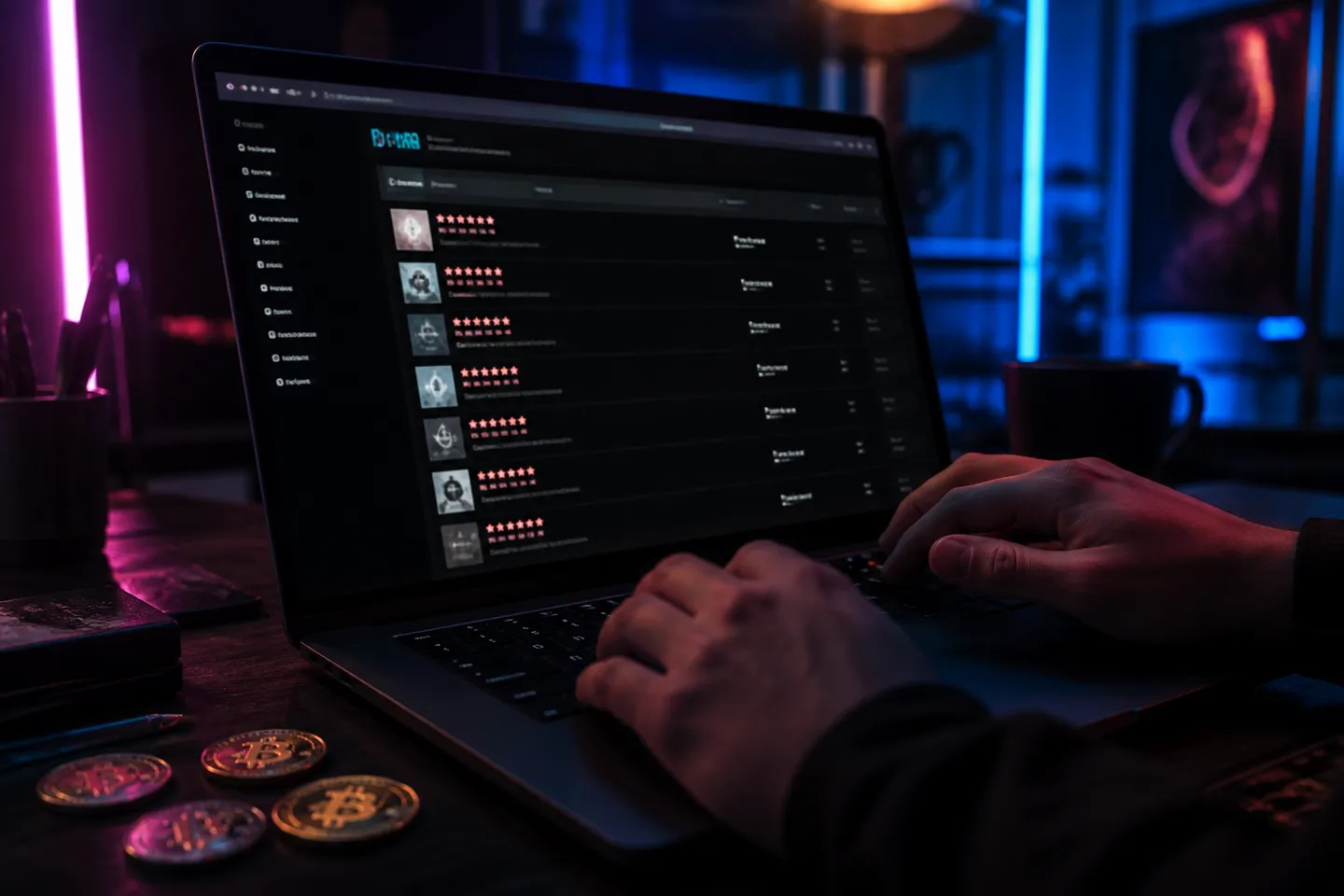 Top Rated Vendors on the DarknetDiscover the top rated vendors on the darknet for reliable purchases. Minimize risks and ensure quality with our detailed vendor reviews.
 Understanding Vendor Trust LevelsExplore vendor trust levels to make informed purchasing decisions in darknet markets. Understand reliability and enhance your buying experi…